

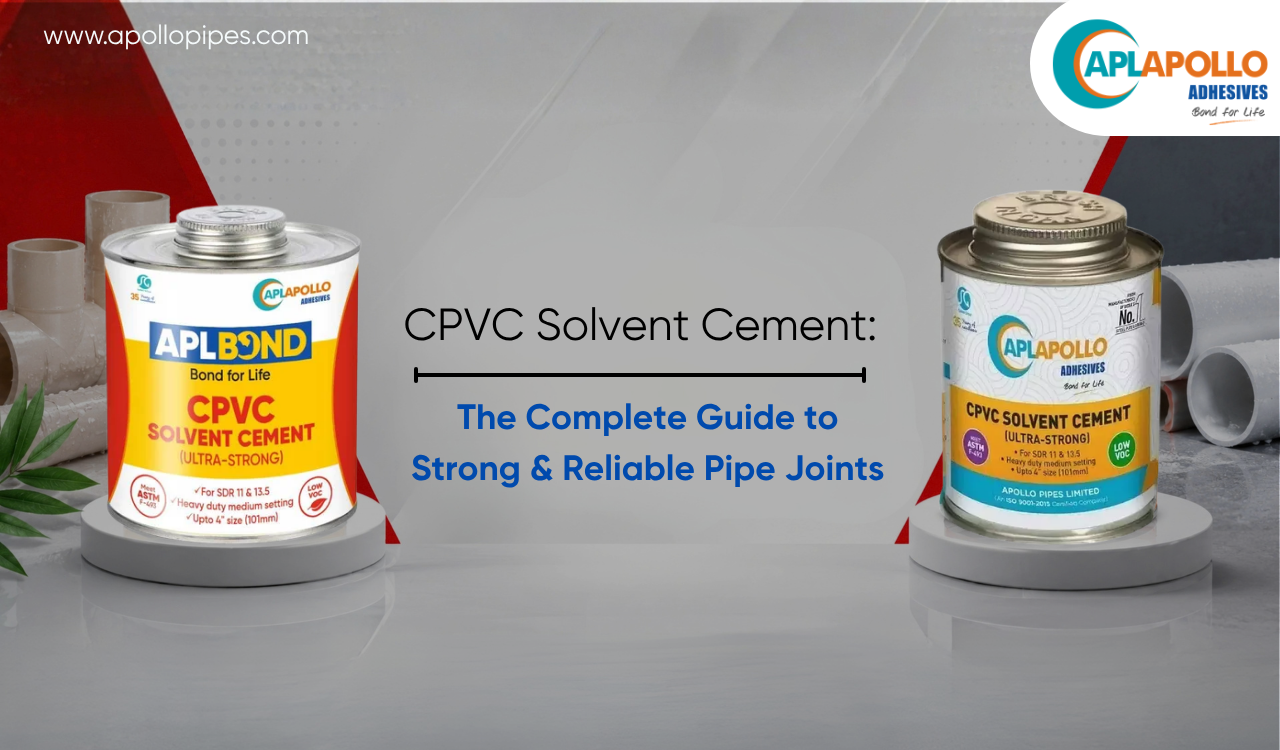
A reliable plumbing system depends not only on the quality of its pipes and fittings but also on how effectively they are joined. Even a high-quality CPVC pipe system can face leakage or joint-related issues if the joining process is not carried out correctly. This is where CPVC solvent cement plays an important role. It is used to join compatible CPVC pipes and fittings and create a firm connection. Understanding how solvent cement works, where it is used, and how to apply it correctly can help homeowners, plumbers and contractors achieve more dependable plumbing installations.
What Is CPVC Solvent Cement?
CPVC solvent cement is a specialized joining material designed for compatible CPVC pipes and fittings. Unlike a conventional adhesive that simply bonds two surfaces together, solvent cement works with the surfaces of compatible plastic components to create a joined connection.
When applied correctly to prepared pipe and fitting surfaces, the cement helps form a secure joint between them. The quality of the cement, compatibility of the products and accuracy of the installation process all contribute to the reliability of the finished connection.
Read More: Relax & Unwind: Designing Spa Spaces That Soothe the Senses
It is important to use a solvent cement specifically intended for CPVC systems rather than assuming that a product made for another pipe material will be suitable.
How Does CPVC Solvent Cement Work?
Creating a reliable joint involves more than simply applying cement to a pipe. Proper preparation and application are essential.
1. Prepare the Pipe and Fitting
First, the pipe should be cut and prepared appropriately, while the fitting should be checked for compatibility and cleanliness. The joining surfaces should be free from dirt, moisture and other contaminants.
2. Clean the Joining Surfaces
Clean surfaces allow the solvent cement to work as intended. Any dust, grease, moisture or debris on the joining area can affect the quality of the connection.
3. Apply the Solvent Cement
Apply the appropriate CPVC solvent cement to the relevant joining surfaces according to the manufacturer’s instructions. Avoid using excessive quantities or applying the product in an unsuitable manner.
4. Insert and Align
The pipe should be inserted properly into the fitting and aligned correctly. Good positioning helps create a uniform connection and reduces the possibility of joint problems.
5. Allow the Joint to Set
The completed joint needs adequate time to set before the plumbing system is put into service. The manufacturer’s instructions should always be followed because setting and curing requirements can vary according to the product and application.
Why Is CPVC Solvent Cement Important?
A properly selected and applied solvent cement can contribute to strong and reliable pipe-to-fitting connections. One of its key purposes is to create a secure joint that helps reduce the risk of leakage when the installation is carried out correctly.
For plumbing professionals, another practical advantage is the relatively straightforward joining process. Solvent cement can also support efficient installation work when the correct product is used with compatible CPVC pipes and fittings.
However, the quality of a joint depends on the complete installation process—not just the cement. Correct preparation, application, alignment and setting are all important for achieving dependable results.
Where Is CPVC Solvent Cement Used?
CPVC solvent cement is commonly used in applications involving compatible CPVC pipes and fittings. These can include residential plumbing systems, commercial plumbing installations and hot and cold water plumbing applications.
It may also be used during repair or installation work where compatible CPVC components need to be joined. The appropriate product should always be selected according to the pipe material and the intended application.
A solvent cement intended for CPVC should not automatically be used with uPVC, PVC or other materials unless the manufacturer specifically states that it is suitable for those applications.
How to Choose the Right CPVC Solvent Cement
When selecting a solvent cement, consider the following factors:
- Material compatibility: Confirm that the product is specifically suitable for the CPVC pipes and fittings being installed.
- Applicable standards: Check the standards and specifications stated by the manufacturer.
- Setting characteristics: Consider the product’s stated setting behaviour and follow its application instructions.
- Product quality: Choose a product manufactured under appropriate quality-control processes.
- Packaging: Select a pack size that suits the scale of the installation while avoiding unnecessary product wastage.
- Manufacturer reputation: Consider established manufacturers that provide clear product information and application guidance.
- Application requirements: Make sure the product is suitable for the intended plumbing system and operating conditions.
Tips for Creating Strong and Reliable Pipe Joints
For better joint reliability, always use compatible pipes, fittings and solvent cement. Keep the joining surfaces clean and dry before application, and apply the cement according to the manufacturer’s instructions.
Read More: Five Reasons Mice Should Not Be Allowed Entry into Homes in Arizona
Ensure that the pipe is inserted correctly into the fitting and remains properly aligned. Avoid putting the joint into service before it has had sufficient time to set. Most importantly, follow the product-specific instructions rather than relying on a generic application method.
APL Apollo CPVC Solvent Cement
APL Apollo offers APL BOND Solvent Cement, a range of solvent cements intended for joining pipes and fittings. According to APL Apollo, the range is available in three variants: CPVC solvent cement, uPVC solvent cement and PVC solvent cement. The company states that APL BOND is manufactured under quality control and features fast setting after application. The product page also states that APL BOND meets ASTM standards and is designed for all SDR/SCH/ASTM/classes covering CPVC, uPVC, PVC and SWR applications. For the CPVC variant, available pack sizes are 25 ml tube, 59 ml tin, 118 ml tin, 237 ml tin, 473 ml tin and 946 ml tin. APL Apollo lists plumbing, agriculture and drainage systems among the applications for its solvent cement.
Choosing the right CPVC solvent cement and using it correctly is an important part of creating dependable CPVC pipe joints. By checking material compatibility, following the manufacturer’s application instructions and allowing the joint to set properly, homeowners and plumbing professionals can support reliable installations and reduce the likelihood of joint-related problems.